


Bifold Doors for Large Openings: Everything You Need to Know
If you’re planning a home extension, renovation, or new build, creating a large opening to the garden is often high on the wish list. Wide expanses of glass flood a room with natural light, improve views, and create a stronger connection between indoor and outdoor living spaces. One of the most popular solutions for achieving this is installing bifold doors.

Bifold doors are specifically designed to span wide openings while offering flexibility, style, and practicality. When fully opened, they fold neatly to one or both sides, stacking compactly and leaving the majority of the aperture clear. When closed, they provide security, insulation, and uninterrupted views.
But choosing bifold doors for large openings requires careful planning. From configuration and panel size to thresholds and structural support, several factors will influence the final result. Here’s what you need to consider.
Why Bifold Doors Work So Well for Large Openings
The main appeal of bifold doors is their ability to open up an entire wall. Unlike traditional patio doors, which usually leave at least one fixed panel in place, bifolds can be folded almost completely out of the way.
For large openings — typically four metres and beyond — this makes a significant difference. Instead of stepping through a narrow doorway, you can create a wide, open transition between your home and garden. This is ideal for:
Open-plan kitchen extensions
Garden rooms
Rear extensions spanning the full width of a property
Entertaining spaces
During warmer months, bifold doors allow you to merge indoor and outdoor areas into one cohesive living space. In cooler weather, they still provide panoramic views while maintaining insulation and weather protection.
Choosing the Right Number of Panels
One of the first decisions when planning bifold doors for a large opening is determining how many panels you need. The total width of your opening will guide this, but your desired appearance and functionality also matter.
For example:
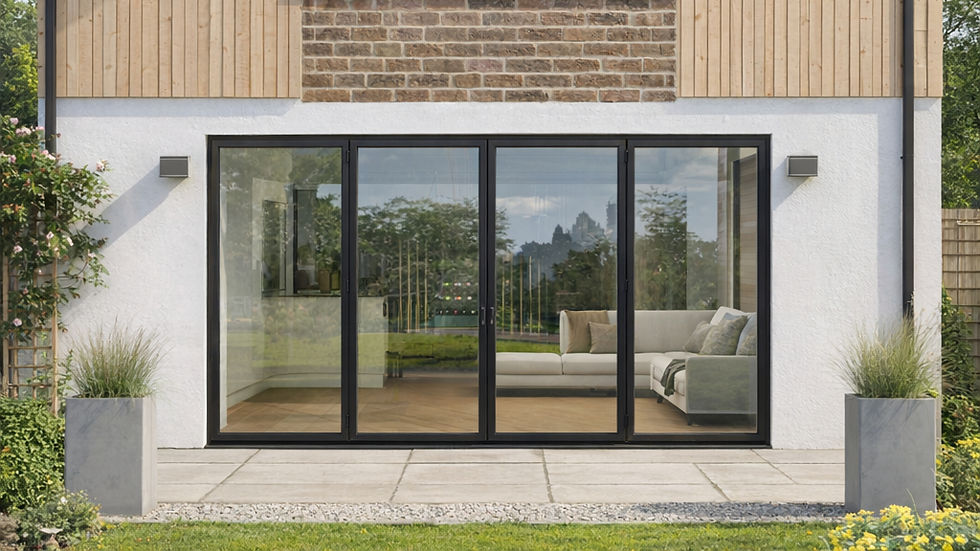
A four-panel system may suit openings around four to five metres.
Larger openings of five to seven metres may require five, six, or more panels.
Very wide spans may be divided into multiple door sets.
Fewer, wider panels can create a cleaner aesthetic with less visible framing. However, wider panels are heavier, so structural capability and hardware quality become even more important.
You should also consider how the doors will stack. Panels can fold:
All to one side
Split evenly in the middle
In an asymmetric configuration
The stacking direction affects furniture placement, traffic flow, and overall usability.
Should You Include a Traffic Door?
For everyday convenience, many homeowners opt to include a traffic door within their bifold system.
A traffic door functions like a standard hinged door. It allows quick access to the garden without having to fold back the entire set of panels. This is particularly useful in winter, or when you simply want to let a pet outside.
If your bifold doors will be the primary access point to the garden, including a traffic door is usually a smart decision. Without one, you may find yourself opening and closing multiple panels more often than expected.
Threshold Options and Accessibility
When installing bifold doors across a large opening, the threshold design plays a crucial role in both appearance and practicality.
Many homeowners prefer low or flush thresholds because they:
Create a seamless visual transition
Reduce trip hazards
Improve accessibility
Enhance indoor-outdoor flow
However, completely flush thresholds may slightly reduce weather resistance compared to higher, rebated options. The right choice depends on your property type, exposure to the elements, and whether the doors are installed at ground level or above.
In modern extensions, it’s common to recess the threshold into the floor so the interior flooring meets the door track cleanly, producing a sleek, contemporary finish.
Structural Considerations for Wide Spans
The wider the opening, the more important structural planning becomes.
Large bifold installations often require substantial structural support above the doors. In many projects, this means installing a steel beam to carry the load of the building above. Your builder or structural engineer will calculate the correct specification based on the size of the opening and the weight it needs to support.
It’s also worth noting that extremely wide door systems may include joints within the outer frame or cill. These joints are typically necessary for manufacturing, transport, and installation purposes. They do not usually affect performance but are worth discussing in advance so you understand how the finished installation will look.
Proper alignment and precision during installation are essential. Even small inaccuracies can affect smooth operation over time, particularly with large, heavy panels.
Panel Width and Sightlines
When planning bifold doors for large openings, panel width has both visual and functional implications.
Wider panels reduce the number of vertical frames across the opening, which can create a more streamlined and modern look. This also maximises your view.
However, wider panels are heavier. The hardware system — including rollers, hinges, and tracks — must be robust enough to handle the load. High-quality components are essential to ensure smooth, long-term operation.
There’s always a balance between achieving minimal sightlines and maintaining reliable performance.
Glazing, Light and Solar Control
Large bifold door installations introduce significant amounts of natural light into a space. While this is generally a positive feature, it’s important to consider solar gain and glare.
Depending on the orientation of your property, you may want to think about:
Solar control glazing
Integrated blinds within the glass
External shading
Internal blinds or curtains
South-facing installations in particular can experience higher heat gain during summer months. Choosing appropriate glazing can help regulate indoor temperatures and improve comfort.
Security and Energy Efficiency
Modern bifold doors are designed to meet strict security and insulation standards. Multi-point locking systems, toughened safety glass, and reinforced frames all contribute to improved protection.
Energy efficiency is another key factor. Large areas of glass naturally allow more heat transfer than solid walls, so selecting high-performance glazing units with good thermal ratings is important.
Look for doors with:
Double or triple glazing
Thermally broken frames
Effective weather seals
When properly specified and installed, bifold doors can achieve excellent insulation levels, even across large openings.
Professional Installation Matters
No matter how high the quality of the doors themselves, poor installation can lead to issues such as:
Difficult operation
Draughts
Water ingress
Large bifold systems require careful handling and precise setup. Choosing experienced professionals ensures the doors operate smoothly and maintain performance over time.
It’s also wise to confirm that your installer checks floor levels, structural support, and clearances before manufacturing begins. Accurate surveying prevents costly adjustments later.
Are Bifold Doors Right for Your Project?
Bifold doors are an excellent solution for large openings, particularly in modern extensions where maximising light and access to the garden is a priority. They offer flexibility, visual impact, and practical functionality in equal measure.
However, they do require thoughtful planning. Panel configuration, structural support, threshold design, and glazing specification all influence the final outcome.
When designed and installed correctly, bifold doors can completely transform a living space — turning a once solid wall into a bright, open connection between home and garden.
If you’re considering bifold doors for a large opening, take the time to evaluate how you’ll use the space day to day. The right configuration will not only look impressive but also enhance how your home feels and functions for years to come.

Comments